

Session 4 - Water, labor and ingenuity
By Alexis Havey and David Perry
As we traveled through the South Valley, the Leadership Farm Bureau class visited a wide variety of operations, from dairies and pistachio hullers to vegetable and cherry farms. Despite their differences, water and labor shortages were a consistent challenge across all. The industry must continue to find ways to innovate and address these issues collectively. On our tours, we saw firsthand how each operation is meeting these challenges head-on.
At the Kern Water Bank Authority, it quickly became apparent that water sustainability and conservation were top priorities. The water bank is a 32-square-mile property in the San Joaquin Valley that can store 1.5 million acre-feet of water underground during wet years, which can then be recovered during dry years for agricultural, municipal and industrial uses. Despite being a great concept at the time of its inception, only six out of 18 water districts in the basin signed up to receive the benefits of the bank—and they are now reaping the rewards as droughts persist. With 93 total wells on the property and 88 in use at any given time, the Kern Water Bank was ahead of the curve in water sustainability. Another important focus is land management on the property; the basin is home to many wildlife species, as well as grazing cattle and mosquito fish.
Grimmway Farms in Bakersfield is proud to be the world’s largest carrot producer. As we toured the plant, it was easy to understand why they can pack up to 2.6 million pounds of carrots per day. They use efficient unloading and loading procedures, as well as eye sorters and robotic packers to keep labor costs down and product standards and efficiency high. Grimmway’s carrot season has no end, as they strategically move around the valley and surrounding areas to keep production going year-round. Grimmway Farms grows 65 different crops and has 365 different product SKUs. They are true leaders in vegetable production, and their plant was amazing to see in action.
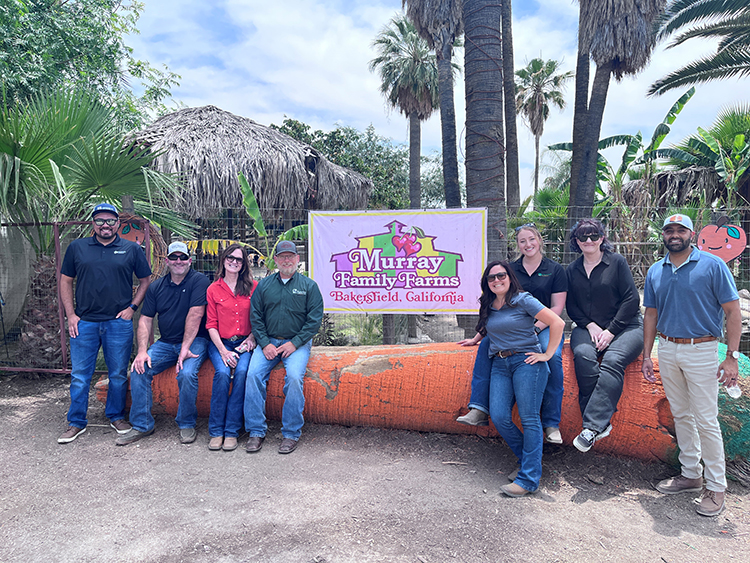
When visiting Murray Family Farms, we saw the struggles of staying relevant in agriculture, even on a smaller scale. Through adaptation and diversification, Murray Farms has remained a thriving business in the South Valley growing cherries, citrus, berries, stone fruits, and more. They have adapted their pruning methods to optimize picking practices. By using new pruning techniques, they can increase labor availability by growing trees that both women and men are able to pick without ladders. The farm also uses water strategically to manage temperature during extreme weather. They use overhead sprinklers in warmer weather to lower the orchard temperature and preserve the buds during differentiation for the next year’s crop. In winter, they use those same overhead sprinklers to stabilize orchard temperatures and maximize the chilling hours needed to set the next crop. This innovative strategy has allowed them to produce a successful crop even when neighboring orchards have failed. Murray Farms’ reliance on water goes beyond its traditional role in agriculture, highlighting the critical need for a stable and reliable water supply.
At Nichols Farms Pistachio Processing Facility, we observed an increased use of automation and mechanization to help reduce labor costs. This facility has adapted equipment from different industries—including corn, peas, potatoes and even construction—to help streamline pistachio processing. By incorporating these different types of equipment, they can reduce processing times and labor requirements. Through the use of artificial intelligence and innovation, Nichols Farms has increased production while raising standards for the industry and the USDA, all while producing a superior product for its consumers.
In Tulare, where 5% of the nation’s milk is produced, we prioritized a visit to Rancho Teresita Dairy. This dairy is a prime example of innovation and development aimed at maximizing production with limited resources. The operation carefully manages herd nutrition and diet, while breeding top genetics to increase milk production. We also observed the construction of a fully automated rotary system being installed to mechanize the milking process. This system allows cows to get in and out of the milking barns faster, increasing production while reducing labor by at least 30%.
Water and labor remain two of California’s most pressing challenges, and through our tour, we saw how urgently they are felt across various counties, each shaped by its own geography. From large-scale operations to smaller family farms, innovation and ingenuity are key to meeting these needs. As we continue our Leadership Farm Bureau journey, we look forward to visiting operations out of state to see how others are tackling these same persistent issues.




.svg.png?cacheid=0.9616018850896426)
