

Written by Adriana Toste, Sacramento County, and Alyssa Drake, San Joaquin County.
What does it mean to be a leader in agriculture?
That was the question woven throughout the first Leadership Farm Bureau session, which took place August 26-28 at the California Farm Bureau headquarters in Sacramento. Over three days, our class explored the many facets of leadership, understanding how Farm Bureau advocates for agriculture and communicates with its members, and learning how we each approach leadership and what motivates us to serve.
The first day began with a presentation about Farm PAC, giving us a better understanding of its role and how agricultural organizations engage in the political process. For those of us who may be more familiar with Farm Bureau at the county level, learning more about the organization’s broader efforts helped put the scope of statewide advocacy into perspective.
We also toured the California Farm Bureau headquarters and had the opportunity to meet members of the organization’s executive team. As part of the experience, we learned what makes an effective professional introduction before putting those skills into practice by introducing ourselves during a California Farm Bureau Board of Directors meeting. It was a simple exercise, but standing in front of a room of agricultural leaders reinforced the importance of being able to clearly communicate who you are, where you come from, and why you are involved.
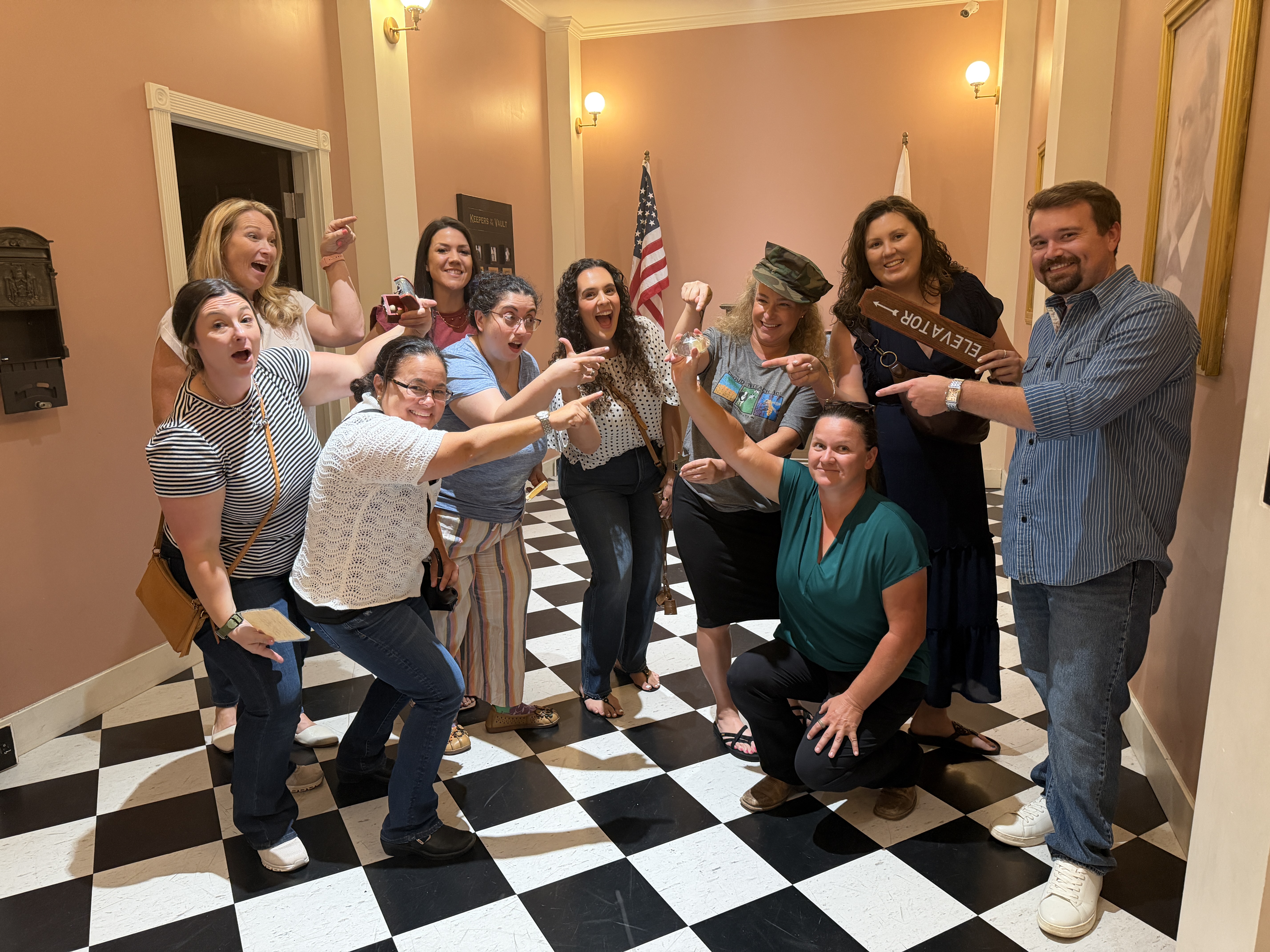
Later that day, our class put our teamwork skills to the test with an escape room in Sacramento. While the activity was a fun way to get to know one another, it also revealed something about leadership: people approach challenges differently. Some naturally focused on details, others looked for patterns, and some helped keep everyone moving forward. Solving the challenge required communication, listening, and trust.
The second day shifted the focus toward another important leadership skill: telling agriculture’s story.
The day began with headshots and group photos, officially putting faces to the people who will spend the next 17 months learning and growing together. We then learned about social media and the role our class will play in helping provide content for California Farm Bureau throughout the program. It was a reminder that leadership also means representing an organization and industry well, and that every individual has a role to play in communicating agriculture’s story.
We also learned about the California Foundation for Agriculture in the Classroom and its work to connect students with agriculture through education. We were then provided an inside look at Ag Alert, California Farm Bureau’s newspaper, and the role agricultural journalism plays in keeping members informed about the issues and developments affecting California agriculture.
Communication, however, is not only about reaching an audience. It is also about understanding the people around you.
Our class participated in an activity where each person brought five items that represented who they are. As we shared the stories behind those items, we learned about our classmates’ backgrounds, interests and experiences. California Farm Bureau President Shannon Douglass also stopped by to welcome us to the program and share her perspective on the value of Leadership Farm Bureau, including her own experience as an LFB alumna.
By the end of the second day, we had begun to understand that leadership is built not only through knowledge, but through relationships and communication.
The third day brought the focus closer to home.
Each member of the class was tasked with selecting and presenting a leadership theory. Hearing our classmates explain the different approaches demonstrated that there is no single way to lead. Different situations, teams, and challenges can call for different leadership approaches, making self-awareness an important part of effective leadership.
That idea continued through a “Find Your Why” exercise. We completed personality assessments, which helped us better understand our individual personality preferences and how those preferences can influence the way we communicate, make decisions and interact with others. The exercise encouraged us to think beyond simply asking, “What kind of leader am I?” and consider a more personal question: “Why do I lead?”
For those of us involved in agriculture, that answer can be deeply connected to service, community, family, and a desire to contribute to an industry that supports so many people. Our first Leadership Farm Bureau session gave us an opportunity to begin identifying what that means for each of us.
From learning how California Farm Bureau advocates for agriculture, to practicing how we introduce ourselves, telling agriculture’s story, working together to solve a challenge, and examining our own leadership styles, the three days offered a broad look at what it means to lead. The biggest takeaway was that leadership starts with awareness of the organization we represent, the people we work alongside, the industry we serve and, perhaps most importantly, ourselves.
Over the next 17 months, our class will have opportunities to put those lessons into practice in Sacramento, Washington, D.C., and most importantly, our community. As we continue learning, building relationships, and contributing to California Farm Bureau, the challenge will be to take what we have learned and turn it into meaningful service as Farm Bureau members and beyond.